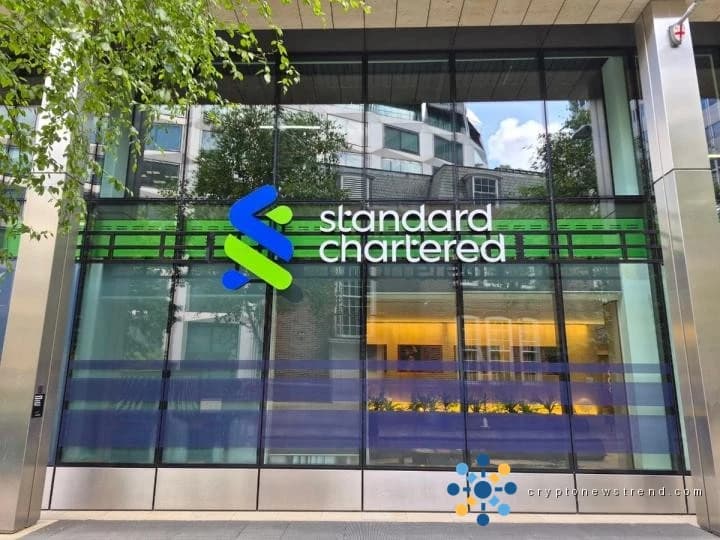

Standard Chartered (STAN) disclosed that it will enable institutional clients to mint and redeem USDC, the dollar‑pegged stablecoin issued by Circle Internet (CRCL), directly through its platform this week.
Expansion of Stablecoin Services
By integrating Circle’s minting and redemption infrastructure, Standard Chartered offers a turnkey solution that eliminates the need for banks to build their own stablecoin pipelines. The move positions the bank alongside peers that have already embraced USDC as a core offering for institutional investors seeking a reliable crypto‑linked asset.
Standard Chartered joins a growing cohort of global financial institutions that are embedding stablecoins into their product suites, reflecting a shift from experimental pilots to fully supported services.
Industry Context and Market Outlook
Bank of New York Mellon (BNY), the world’s largest custody bank, recently expanded its USDC capabilities, allowing clients to custody, mint, and redeem the token using BNY’s existing infrastructure. With $59 trillion in assets under management, BNY’s adoption underscores the mainstream acceptance of stablecoins among systemic banks.
Chainalysis projects that annual stablecoin settlement volumes could approach one quadrillion dollars by 2030, signaling that USDC and similar tokens are becoming integral to the financial plumbing that supports both investors and blockchain‑based transactions.
Implications for Banks
Andrew … (analyst) noted that “banks aren’t asking whether they’ll use stablecoins anymore. They’re deciding how they’ll use them,” highlighting a strategic pivot toward leveraging established stablecoin networks rather than creating proprietary alternatives. This perspective drives banks to align with existing ecosystems to capture market share quickly.
As more institutions adopt USDC, the stablecoin’s price remains anchored close to $1.00, offering investors a predictable store of value while providing banks with a scalable, blockchain‑compatible tool for settlement and liquidity management.